




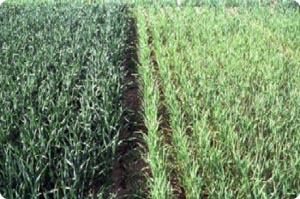
N deficient wheat, Havre, 1996. Image by R. Engel
The MSU Extension Soil Fertility/Nutrient Management program at MSU focuses on the processes that affect soil fertility and nutrient losses
so that nutrients can be managed more sustainably. Soil testing can detect low nutrient
levels that lead to possible crop nutrient deficiencies. In addition, soil testing
allows for timely adjustments in fertilizer applications, reducing input costs. Understanding
the economics of fertilizing, yield goals, and crop quality, along with soil fertility
management can assist the producer in meeting profit goals.
Research conducted at MSU, the Agricultural Research Centers, and throughout the region
are synthesized into fact sheets, modules, and presentations geared toward extension
agents, crop advisers, farmers, ranchers, and/or homeowners. The current research
focus is on cropland soil acidification, improving nitrogen management in dryland cropping systems, and sulfur fertilization rates for canola, pea, and wheat.
If you have any questions about soil nutrients contact Dr. Clain Jones. If you think plant growth issues may be related to pesticide (e.g., herbicide residual in compost), please contact Megan Hager (406-994-6297) or Dr. Tim Seipel (406-994-4783) for assistance.
MSU News Releases:
Additional Resources
- Increasing protein levels in wheat: Ag PhD interview with Clain. Scroll to April 16, minute 22.57. SoundCloud link. As referenced in the interview, use the Small Grains Nitrogen Economic Calculator to determine N fertilization application rates.
- The Roots of Soil Health: Benefits of Perennials and Recrop - Dec 2025 presentation by Clain to Montana Organic Association. pdf of his slides
- Mitigating Nitrate and Managing Fertility in Annual Forages - Northern Ag Network interview with Clain and Hayes Goosey, MSU Extension Forage Specialist - May 2025
- Building Healthy Garden Soils, a recording of Clain's April 2025 presentation to Valley County gardeners.
- Drought resources:
Basic Steps for Soil Testing
- Start by contacting your County Agricultural Extension Agent (Local Offices - MSU Extension | Montana State University); some may have soil probes to loan out and they might help ship soils to a lab.
- Consider sampling good and bad areas or at least two areas if you think they will be quite different in nutrients based on observations including soil color, texture, or plant growth. See Soil Testing: Getting a Good Sample
- Select which soil parameters the lab should test. Often Extension Agents like certain soil test packages and can help you decide. Soil Testing: Once You Have the Sample has specific information.
- To interpret the test results:
- The lab report with test results may have recommendations.
- See The Soil Scoops Soil Test Interpretation, Feeding the Garden Soil, and Fertilizer Rate Calculations
- Or contact your County Agricultural Extension Agent
- Or contact Clain directly.